



Digital News Guru International Affairs Desk:
Trump rescinds the 25 % punitive tariff on Indian goods
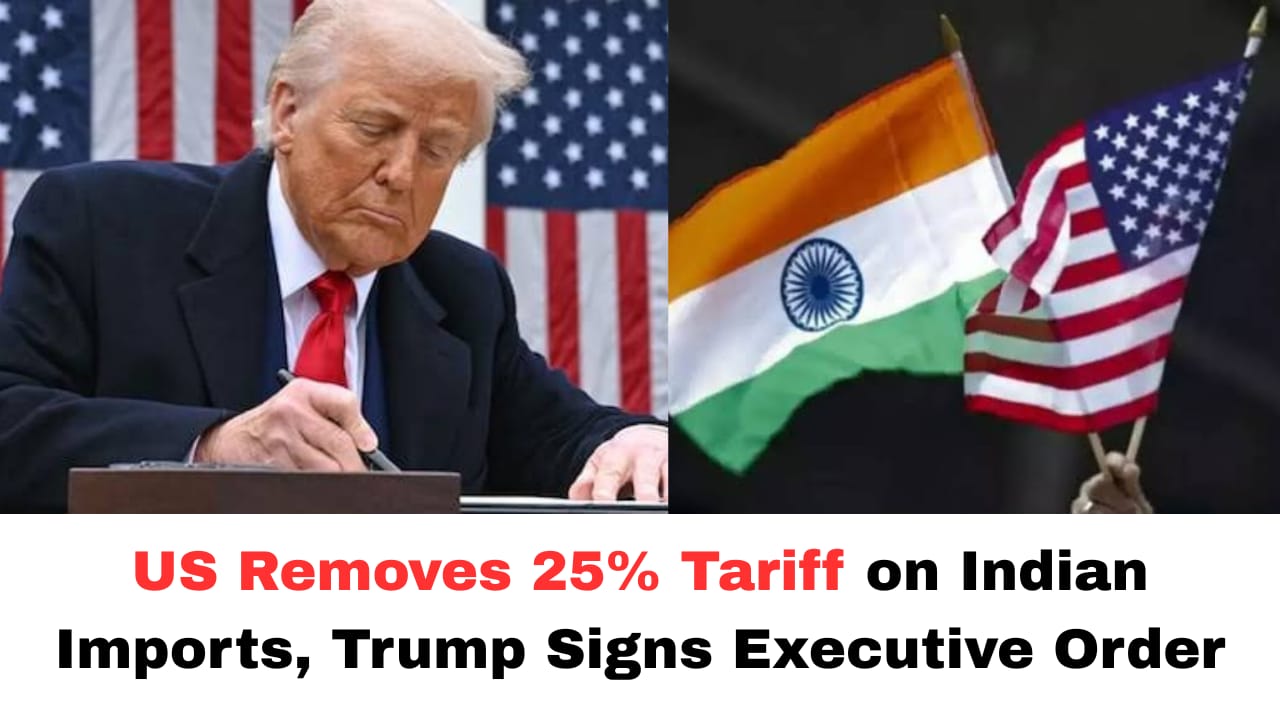
In a major diplomatic and economic development that could reshape bilateral commerce and geopolitical alignments, U.S. President Donald Trump signed an executive order on Friday to rescind the 25% punitive tariff on Indian imports that had been levied as a penalty for India’s purchases of Russian crude oil. This tariff rollback is part of an interim trade framework agreed upon by the United States and India, heralding a fresh chapter in one of the world’s most significant commercial relationships.
From Tariff War to Trade Truce
The punitive 25% levy was imposed in August 2025, during heightened tensions between the two countries. The Trump administration argued that India’s continued purchases of Russian oil — discounted under Western sanctions — undermined U.S. policy aimed at isolating Moscow over its invasion of Ukraine. The tariff was layered on top of an existing 25% “reciprocal” duty, pushing effective duties on many Indian exports to as high as 50%, and sharply curtailing trade flows.
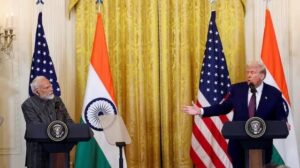
However, after months of negotiations, both sides reached an interim trade agreement that made it possible for Washington to roll back the punitive duty in exchange for strategic commitments from New Delhi. The removal of the tariff took effect at 12:01 a.m. ET on February 7, 2026, marking a dramatic de-escalation of the tariff standoff.
Key Elements of the Executive Order
The executive order signed by President Trump not only rescinded the 25% surcharge but also linked the tariff rollback to specific commitments from India:
- India has pledged to stop directly or indirectly importing Russian Federation oil — a central concern for Washington.
- New Delhi has also committed to increasing purchases of U.S. energy products and to expanding defense cooperation over the next decade.
- The order stipulates that a U.S. government monitoring panel will track Indian compliance on oil imports; if India resumes Russian oil purchases, the 25% tariff could be reinstated.
These provisions underscore that while the tariff removal is significant, it is conditional and tied to broader strategic and commercial goals agreed upon by both governments.
Interim Trade Framework: More Than Just Tariffs
Alongside the tariff repeal, India and the United States simultaneously unveiled a framework for an interim trade deal designed to pave the way for a broader, comprehensive trade agreement later in 2026. Under this framework:
- Reciprocal tariffs on Indian exports to the U.S. are set to fall to 18%, down from an earlier level of 25% (and effectively 50% at the height of the trade conflict).
- India has agreed to purchase roughly $500 billion worth of U.S. goods over the next five years, encompassing energy products, aircraft and aircraft parts, precious metals, technology products, and coking coal.
- Both sides have signaled intentions to address non-tariff barriers and align product standards to facilitate smoother trade flows.
The interim pact has been characterized by officials on both sides as a reciprocal and mutually beneficial arrangement that strengthens economic ties while ensuring strategic alignment in energy and security cooperation.
Domestic Reactions: Optimism & Skepticism
In India, the tariff rollback has been welcomed by many in the business community, especially exporters who had faced severe competitive disadvantages under the elevated tariff regime. Sectors such as textiles, garments, leather goods, and machinery are expected to benefit from lower duties and improved market access in the U.S. market. Furthermore, the reduction to 18% puts Indian products at a slight competitive edge relative to some regional rivals.
However, reactions in New Delhi are not uniformly positive. Some political opposition figures and industry analysts have raised concerns about the conditional nature of the tariff rollback — particularly the requirement that India curtail all Russian oil imports. Critics argue that this could constrain India’s energy security strategy, which has historically prioritized diversified supply sources in pursuit of affordable fuel for its large and growing economy.
Similarly, concerns have been voiced about the impact of increased U.S. imports on sensitive domestic sectors in India, such as agriculture and dairy, although negotiators reportedly secured protections for certain segments deemed strategically important.
Implications for Global Trade and Geopolitics
The tariff rollback and trade framework come at a time of intensified geopolitical competition. For the United States, strengthening economic ties with India — a fellow democratic power — is a strategic priority amid broader efforts to counterbalance China’s growing economic and military influence. For India, deeper trade integration with the U.S. offers access to capital, technology, and markets crucial for its long-term growth ambitions.
Energy cooperation represents another strategic layer: India’s commitment to reduce Russian oil imports could shift global energy flows, with increased purchases from the United States and other partners. This move could also align energy and climate objectives with trade policy — a growing focus in global economic diplomacy.
Looking Ahead
While the tariff rollback and interim deal provide immediate relief and a roadmap for deeper cooperation, significant challenges remain. Both sides must navigate sensitive domestic constituencies, reconcile divergent trade policy priorities, and finalize a broader trade agreement by March 2026 — a tight timeline given the complexity of issues involved.
Nevertheless, the tariff removal marks a symbolic and substantive thaw in what had become a tense phase of India–U.S. relations. With both capitals signaling a renewed commitment to partnership, this latest chapter could set the stage for a more robust and sustainable economic alliance in the years to come.
You May Also Read: Nationwide Ola, Uber & Rapido Driver Strike, Why Services Disrupted Today?