



Digital News Guru National Desk:
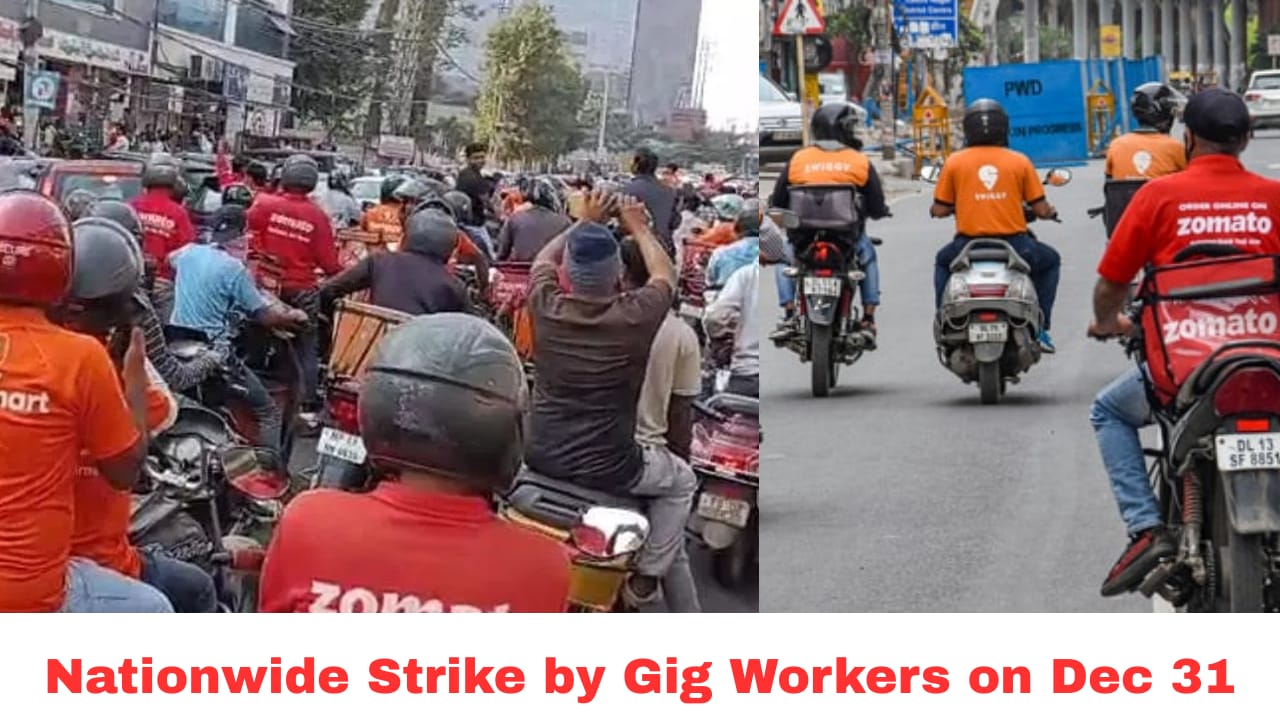
Nationwide Gig Workers’ Strike Disrupts Delivery Services Across India
Across India, gig and platform workers have called a nationwide strike today, aiming to disrupt delivery and app-based services — especially food delivery and quick-commerce — on one of the busiest nights of the year. Workers are logging off delivery apps or refusing orders, potentially affecting services from Zomato, Swiggy, Blinkit, Zepto, Instamart, Amazon and Flipkart.
The strike is being led by workers organized under unions such as the Gig & Platform Services Workers Union (GIPSWU) and the Telangana Gig and Platform Workers’ Union (TGPWU), with support from the Indian Federation of App-Based Transport Workers (IFAT).
Scale of Participation
Unions claim that more than 1.7 lakh delivery and app-based workers across India have confirmed participation. Many workers are deliberately going “offline” on their apps to protest, affecting services in major cities and towns nationwide.
Why They Are Striking
The protest reflects deep-rooted grievances among gig workers who say they are poorly compensated, overworked, and unprotected by labour laws:
- Low and unpredictable earnings: Pay per order has stagnated or fallen, and many workers report being forced to work long hours (12–16 h) just to make ends meet.
- Unsafe working conditions: Demands for “10-minute deliveries” and ultra-fast targets create pressure that riders say puts their safety at risk, especially in bad weather or heavy traffic.
- No social security or job protection: Unlike formal employees, gig workers often lack basic protections such as insurance, paid leave, maternity benefits, minimum wage rights, and regulated work hours.
- Algorithmic penalties and arbitrary deactivations: Workers complain that platform algorithms can penalize or block them from accessing jobs without transparency or appeal.
Unions say the strike is not just about one night’s pay but a broader demand for reforms: fair minimum per-km rates (e.g., Rs 20/km), better monthly earnings guarantees (e.g., Rs 24,000), a ban on ultra-fast delivery models, and formal legal recognition under labour laws.

Background: Earlier Strike Action
This New Year’s Eve strike follows an earlier “digital strike” on December 25, when approximately 40,000 workers logged off platforms to protest similar issues, causing noticeable service disruptions in some regions. Unions say the lack of meaningful platform responses since then has led to today’s escalated nationwide action.
Industry and Company Response
Food delivery and quick-commerce companies like Zomato and Swiggy have responded by raising payouts and incentives for delivery partners during peak hours tonight — a move they say is a standard festive practice but also aimed at reducing the impact of the strike.
Examples include:
- Higher per-order payouts (Rs 120–150) during peak New Year’s Eve hours.
- Temporary waivers on penalties for order refusals or cancellations to encourage workers to stay online.
- Promised additional daily earning incentives (e.g., up to Rs 3,000–10,000) for willing partners depending on demand and app availability.
These adjustments aim to deter potential service disruptions and keep delivery supply steady during one of the busiest ordering nights of the year.
Impact on Consumers and Businesses
If widely observed, the strike may lead to:
- Delayed or canceled edibles and grocery deliveries during peak evening hours.
- Logistical challenges for last-minute party planning and celebrations.
- Some businesses and consumers urging alternative plans, including early ordering or in-store purchases. Discussions on social media reflect mixed reactions — from support for the workers’ demands to skepticism about strike efficacy.
Major FMCG and retail companies have reportedly increased inventory and stock strategies at physical stores and modern trade outlets to buffer any distribution gaps during the protest.
Political and Public Reaction
India’s gig worker strike has also drawn political attention. Some lawmakers describe the movement as a serious national issue, highlighting the economic pressures that drive many educated and qualified youth into precarious gig roles without adequate social and financial protections.
Public opinion appears divided — while many users appreciate the role of gig workers in daily convenience, others argue that high demand days like New Year’s Eve might not be the most strategic moment for a strike. Yet, solidarity campaigns have sprung up on social media calling for consumer support.
What’s Next?
The strike is expected to continue through New Year’s Eve evening, with unions holding out for broader discussions with both platforms and government authorities on long-term labour policy reforms. The scale of participation and outcomes may shape future negotiations in India’s rapidly expanding gig economy.
You May Also Read: India Rejects China’s Mediation Claim on India–Pakistan Conflict as ‘Bizarre’