



Digital News Guru Maharashtra Desk:
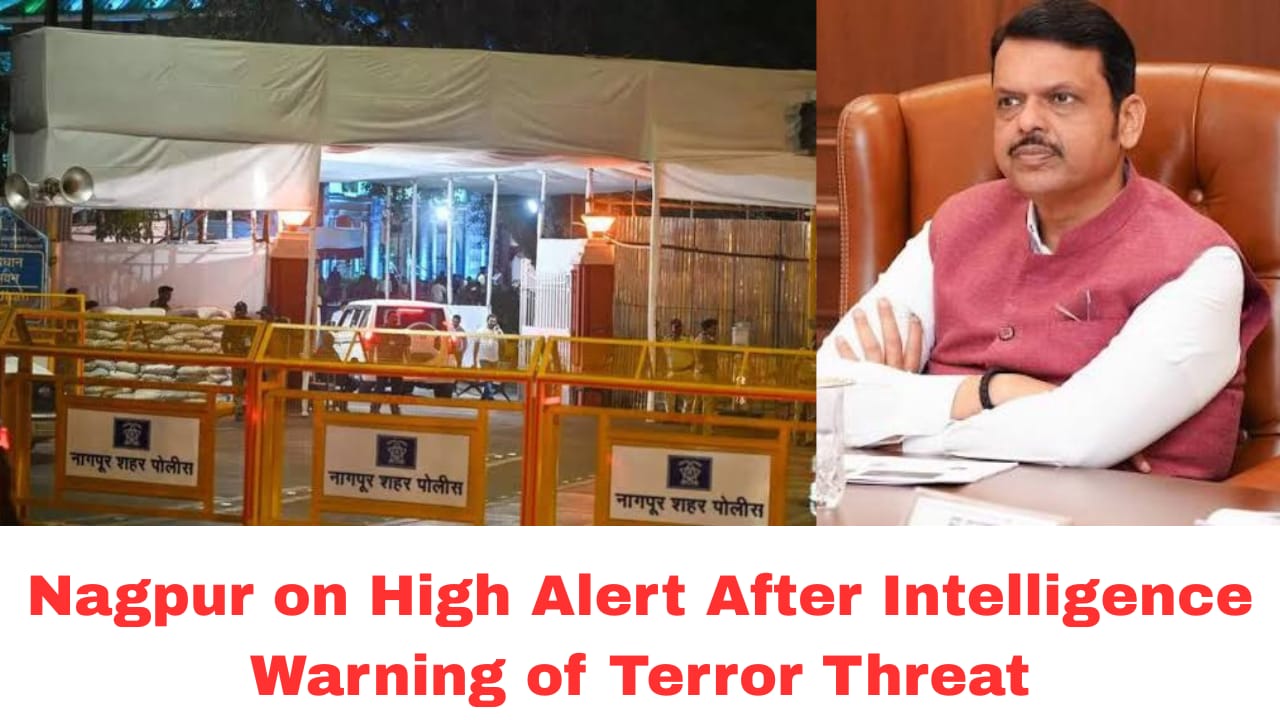
The city of Nagpur has been placed on high alert, as intelligence agencies have reportedly issued warnings of a possible attack by Jaish‑e‑Mohammed (JeM). The alert comes as the state legislative body’s winter session begins in the city — leading to heightened security across sensitive sites.
Officials say the threat is a potential retaliatory strike linked to Operation Sindoor — a series of precision strikes earlier this year against terror-group facilities. With that background, authorities are not taking chances: key public spaces, religious sites, locations associated with Rashtriya Swayamsevak Sangh (RSS), and crowded transport hubs have been classified as sensitive, and security forces have ramped up presence across the city.

Security Response: Fortifying the City
Nagpur’s security apparatus has been mobilized in full force. Over 5,000 police personnel, including state anti-terror units and special squads, have been deployed across vulnerable zones. The cover includes:
- Enhanced patrols and vehicle/person checks at railway stations, bus terminals, and entry-exit points of the city.
- Deployment of bomb-detection squads (BDDS), ready on alert across critical installations, crowded marketplaces, and religious sites.
- “No-fly zones”, drone surveillance, and facial recognition surveillance systems in areas deemed high-risk — including around the legislative assembly complex, religious shrines, and installations linked to major organisations.
- Strict access control with repeated inspections of hotels, guest houses, residences of political figures, and lodges near sensitive zones.
Additionally, given that the winter session of the state legislature is underway — involving movement of ministers, lawmakers, and officials — the police strength has reportedly been increased to over 8,000 personnel to manage security, logistics, crowd control, and rapid response if needed.
Why Nagpur — Threat Context & Strategic Importance
There are multiple factors that make Nagpur a focal point for such security concerns:
- The purported motive behind the alert is tied to Operation Sindoor: JeM is believed to be planning retaliatory attacks targeting symbolic political and ideological sites — public shrines, religious sites, and institutions associated with socio-political organisations.
- The timing is sensitive: with the winter session of the legislature ongoing (Dec 8–14), the city is hosting a large influx of political figures, officials, and media — increasing stakes for security agencies aiming to prevent any attempt at sabotage or terror.
- Nagpur’s geography and connectivity: transportation hubs — railway stations, bus stands, airports — make it a potential entry point for infiltration or transit, hence the heightened checks at all such nodes.
Given this confluence of risk factors, local administration has described the precautionary measures as “anti-sabotage protocols,” emphasizing that surveillance, vigilance and readiness are in full swing.
What Residents & Visitors Should Know — Caution Advised
For those living in Nagpur or visiting the city during this period, authorities have issued several advisories:
- Avoid crowded or sensitive zones — especially near political / religious sites, major shrines, assembly-related venues, or known gathering spots — unless absolutely necessary.
- Be ready for strict security checks: increased frisking, bag checks, verification at entry/exit points in railway stations, bus terminals, and public transport hubs. Security personnel may also inspect parked vehicles, luggage, or suspicious objects.
- Cooperate with anti-terror & police teams if approached; treat instructions as legitimate — authorities have emphasised that this is not a drill, but a live security scenario.
- Stay alert — be aware of surroundings, avoid spreading or reacting to unverified rumours, and report anything suspicious to police control rooms immediately. Official warnings have been circulated via public-address systems and local media.
Beyond Security: What This Means for Nagpur’s Balance
This alert — and the accompanying security measures — has broader implications:
- Civic life disruption: With tight security, increased vehicle/traffic checks, and restricted access in sensitive zones, daily life could be affected — markets may see fewer visitors, transport delays are possible, and public gatherings are likely to be curtailed for now.
- Psychological impact: The mere possibility of terror threat, along with visible heavy security, can cause anxiety — particularly among those living near identified hotspots. This may lead to reduced mobility, people avoiding public spaces or religious places, just when civic normalcy is most needed.
- Administrative burden: Besides security, local law-enforcement agencies now also need to manage traffic, emergency response, crowd-management, and public communications — large logistic efforts to ensure safety without causing panic.
At the same time, the swift, visible response — deployment of forces, activation of bomb-squad protocols, AI-powered surveillance and multi-agency coordination — sends a firm signal that security agencies are alert, reactive, and trying to stay ahead of possible threats.
What to Watch in Coming Days
As the winter session proceeds and security stays high, key developments to follow include:
- Whether intelligence yields specific actionable leads — meaning, arrests, exposure of sleeper cells, or real attempts at targeting sensitive sites. If that happens, security alerts may escalate or trigger targeted operations.

- Public advisories and updates from local administration and police — transparency will be important to prevent panic and manage public trust.
- How effectively authorities manage to balance security needs with civic normalcy — ensuring people can go about daily life without undue hardship while maintaining vigilance.
- The role of surveillance & technology in maintaining security — with recent news of AI-powered crowd/monitoring tools being deployed in Nagpur (for instance during assembly session). Their effectiveness might set new standards for security in large-scale civic events.
Conclusion
The high-alert situation in Nagpur — following recent intelligence about a potential terror threat from JeM — has placed the city under maximum vigilance. As security forces deploy thousands of personnel, conduct anti-sabotage drills, sweep through transport hubs and sensitive sites, and monitor crowds and communications, the message is clear: authorities are treating this with utmost seriousness.
For residents and visitors, caution, awareness and cooperation are the best practices right now. While it may feel like a moment of heightened tension — with possible disruptions to daily routines — the priority remains public safety and prevention of any untoward incident.
At a broader level, this episode underlines the fragile balance between civil life and security preparedness in cities like Nagpur. The coming days will reveal whether the alert translates into preventive success — or transforms into further disruption or fear. For now, vigilance, calm, and steady civic cooperation remain the key.
You May Also Read: RBI Cuts Repo Rate to 5.25% — What It Means for Home Loans, Economy & Markets